
BLOG
Understanding Demolition Approvals, Safety Requirements and Site Preparation for Residential Projects in New South Wales
Before any residential demolition project begins in New South Wales, several legal and practical requirements must be addressed. While every property is different, demolition is regulated to help protect workers, neighbouring properties, public safety and the environment.
Many property owners assume demolition simply starts once a contractor has been engaged, but approvals, inspections and site preparation are often required before machinery arrives.
Understanding these requirements helps prevent unnecessary delays and allows construction projects to progress more efficiently.
When Demolition Approval Is Required
In New South Wales, demolition work is generally controlled by local councils and the Environmental Planning and Assessment framework. Depending on the scope of work, demolition may require a Development Application (DA), a Complying Development Certificate (CDC), or another form of planning approval before work can begin.
The approval pathway depends on several factors, including:
The type of structure being demolished
Whether the building is heritage listed or located within a heritage conservation area
The size and complexity of the demolition
The future development proposed for the site
Local council planning controls
Obtaining the correct approvals before demolition begins helps avoid project delays and compliance issues.
Existing Services Must Be Safely Disconnected
Before demolition can proceed, essential services connected to the property usually need to be identified and disconnected.
These commonly include:
Electricity
Gas
Water
Sewer
Telecommunications
Stormwater connections where required
Service disconnections reduce the risk of accidents during demolition and help protect workers operating heavy machinery around the site.
Underground service locations should also be confirmed before excavation or demolition equipment begins operating.
Asbestos Identification Is a Critical Step
Many residential properties built before the late twentieth century may contain asbestos-containing materials.
Common locations include:
Roofing
Eaves
Wall sheeting
Bathroom linings
Vinyl flooring
Fencing
External cladding
Before demolition begins, asbestos should be identified through appropriate inspections. Where asbestos is present, it must be removed in accordance with New South Wales legislation before general demolition work can continue.
Failing to identify asbestos early can delay demolition and increase project costs.
Site Safety Extends Beyond the Property Boundary
Residential demolition does not only affect the building being removed. The surrounding area must also be protected throughout the project.
Depending on the site, safety measures may include:
Temporary fencing
Exclusion zones
Dust suppression
Traffic management
Pedestrian protection
Protection of neighbouring buildings
Controlled waste handling
These measures become particularly important throughout established Sydney suburbs where homes are often positioned close together and construction occurs near public roads.
Careful planning reduces risks for workers, neighbouring residents and members of the public.
Site Preparation Supports the Next Stage of Construction
Demolition is only the beginning of preparing land for redevelopment. Once the structure has been removed, additional work is often required before construction can commence.
This may include:
Removing remaining footings
Clearing demolition waste
Excavation
Site levelling
Pier excavation
Footing excavation
Preparing the building platform
Coordinating these activities allows the project to move efficiently from demolition into construction without unnecessary downtime between trades.
Planning Reduces Delays and Unexpected Problems
Many issues that affect demolition projects are identified well before any machinery arrives on site. Planning approvals, asbestos inspections, service disconnections, site access, waste removal and neighbouring property protection all influence how smoothly demolition progresses.
Addressing these requirements early helps minimise delays while creating a safer worksite that is ready for excavation and construction.
Understanding the approval process and site preparation requirements gives property owners a clearer picture of what is involved before demolition begins, making it easier to plan the overall construction project from start to finish.





DISCOVER WHAT OUR CUSTOMERS HAVE TO SAY ABOUT US
REVIEWS
REVIEW US ON GOOGLE
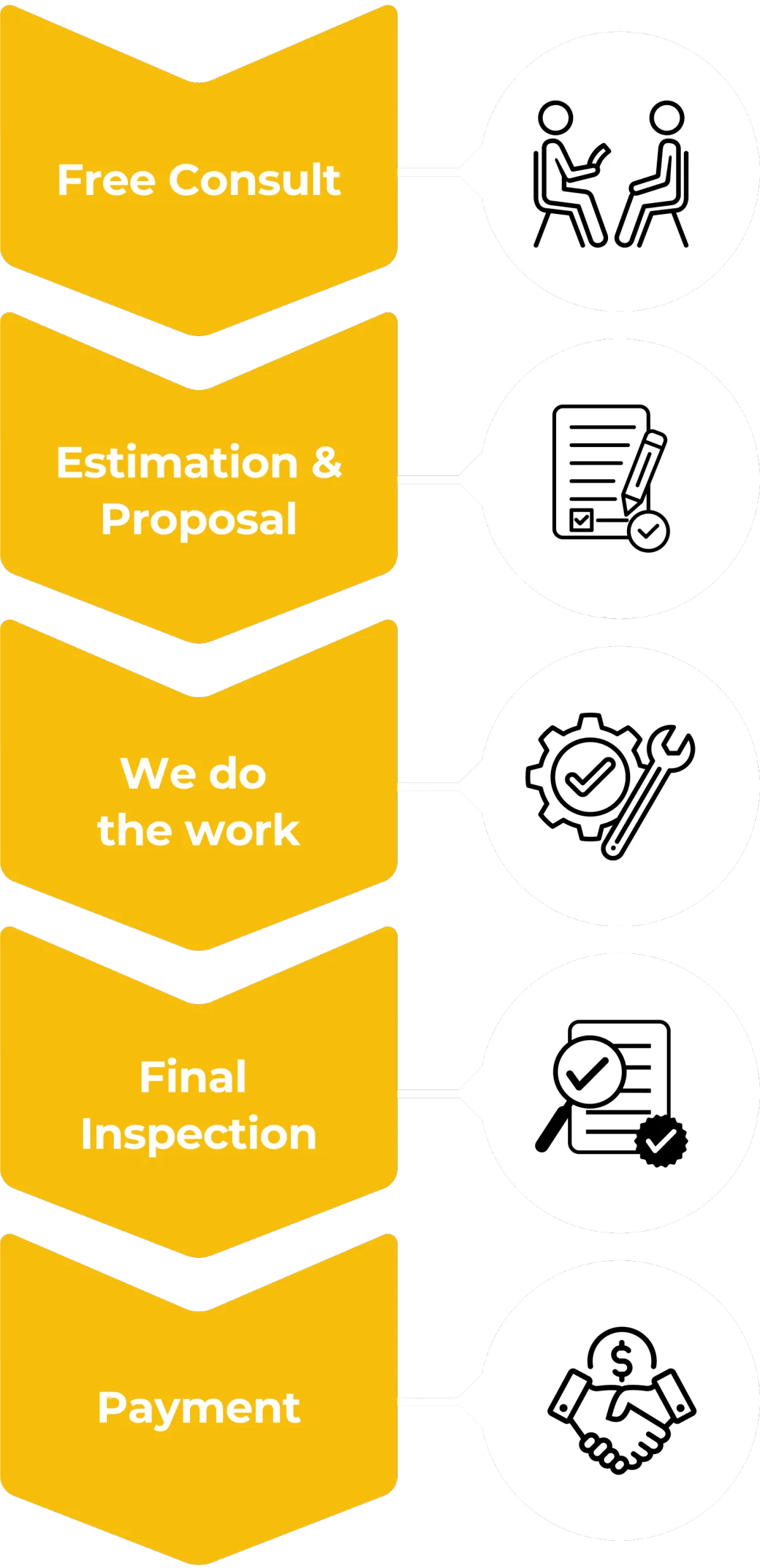
our process
Our process is simple and only contains a few simple steps

READY TO take the next step?
get a free quote TODAY!
