
BLOG
The Complete Guide to Planning a Demolition Project in Sydney From Site Preparation to Safe Structure Removal
Planning a demolition project involves far more than simply removing an existing structure. Whether the goal is to build a new home, redevelop a commercial property or prepare land for construction, every demolition project requires careful planning before machinery arrives on site. Throughout Sydney, demolition often takes place on established properties with neighbouring buildings, underground services and limited access, making preparation an essential part of completing the work safely and efficiently.
Understanding the process before work begins helps property owners avoid unnecessary delays while ensuring the site is ready for the next stage of construction.
Understanding the Scope of the Demolition
The first step is determining exactly what needs to be demolished. Some projects involve complete removal of a house or commercial building, while others only require partial demolition before renovations or extensions begin.
The type of structure affects how the work is planned. Older homes may contain materials that require specialised handling, while commercial buildings often have more complex structural components. Boundary locations, neighbouring properties and site access also influence the demolition method.
Before any work starts, the building is assessed to determine the safest and most practical approach for the project.
Site Preparation Before Demolition Begins
Proper site preparation is one of the most important parts of the demolition process. Existing services such as electricity, gas, water, sewer and telecommunications generally need to be identified and disconnected before demolition can safely proceed.
The surrounding site should also be inspected for fencing, retaining walls, trees and neighbouring structures that may need protection during the works.
In many Sydney suburbs, narrow streets, shared driveways and limited access require careful planning for machinery movement, waste removal and traffic management. Preparing these details early helps minimise disruption once demolition begins.
Approvals and Safety Requirements in New South Wales
Demolition work in New South Wales is governed by specific legislation and local council requirements. Depending on the type of structure and the scope of work, approvals may be required before demolition can commence.
Safe Work NSW requirements, environmental controls and waste management obligations may also apply. Larger projects often require demolition work plans, site-specific risk assessments and measures to control dust, noise and debris.
Property owners should also be aware that asbestos inspections may be necessary for many older buildings before demolition begins. If asbestos-containing materials are identified, they must be managed and removed in accordance with NSW regulations before general demolition work continues.
Planning for Machinery Access
One of the biggest factors affecting demolition is site accessibility. While some properties provide wide access for large machinery, many homes across Sydney's eastern suburbs are built on narrow blocks or surrounded by neighbouring buildings.
Restricted access may require compact excavators or specialised equipment capable of operating safely in confined spaces. In some locations, machinery may need to enter through side access rather than the front of the property.
Planning machinery access before demolition begins reduces delays and helps prevent unnecessary damage to surrounding landscaping, fences and neighbouring structures.
Waste Removal After Demolition
Once demolition is complete, the remaining materials need to be removed before construction can begin. Concrete, bricks, timber, metal and other building materials are separated where practical before being transported to approved recycling or disposal facilities.
Removing demolition waste promptly creates a safer worksite and allows excavation, footing construction or foundation work to begin without unnecessary obstruction.
For larger redevelopment projects, coordinating waste removal alongside demolition helps maintain efficient site operations and keeps construction progressing according to schedule.
Preparing the Site for Construction
Demolition is only one stage of the overall construction process. Once structures have been removed, the site often requires additional preparation before builders can begin.
This may include excavation, detailed excavation, footing excavation, pier installation, site levelling or land clearing depending on the engineering requirements for the project.
Completing these stages in sequence helps provide stable ground for foundations while reducing delays between trades.
Careful planning from the beginning allows demolition to transition smoothly into construction, helping create a safer, more organised building site.





DISCOVER WHAT OUR CUSTOMERS HAVE TO SAY ABOUT US
REVIEWS
REVIEW US ON GOOGLE
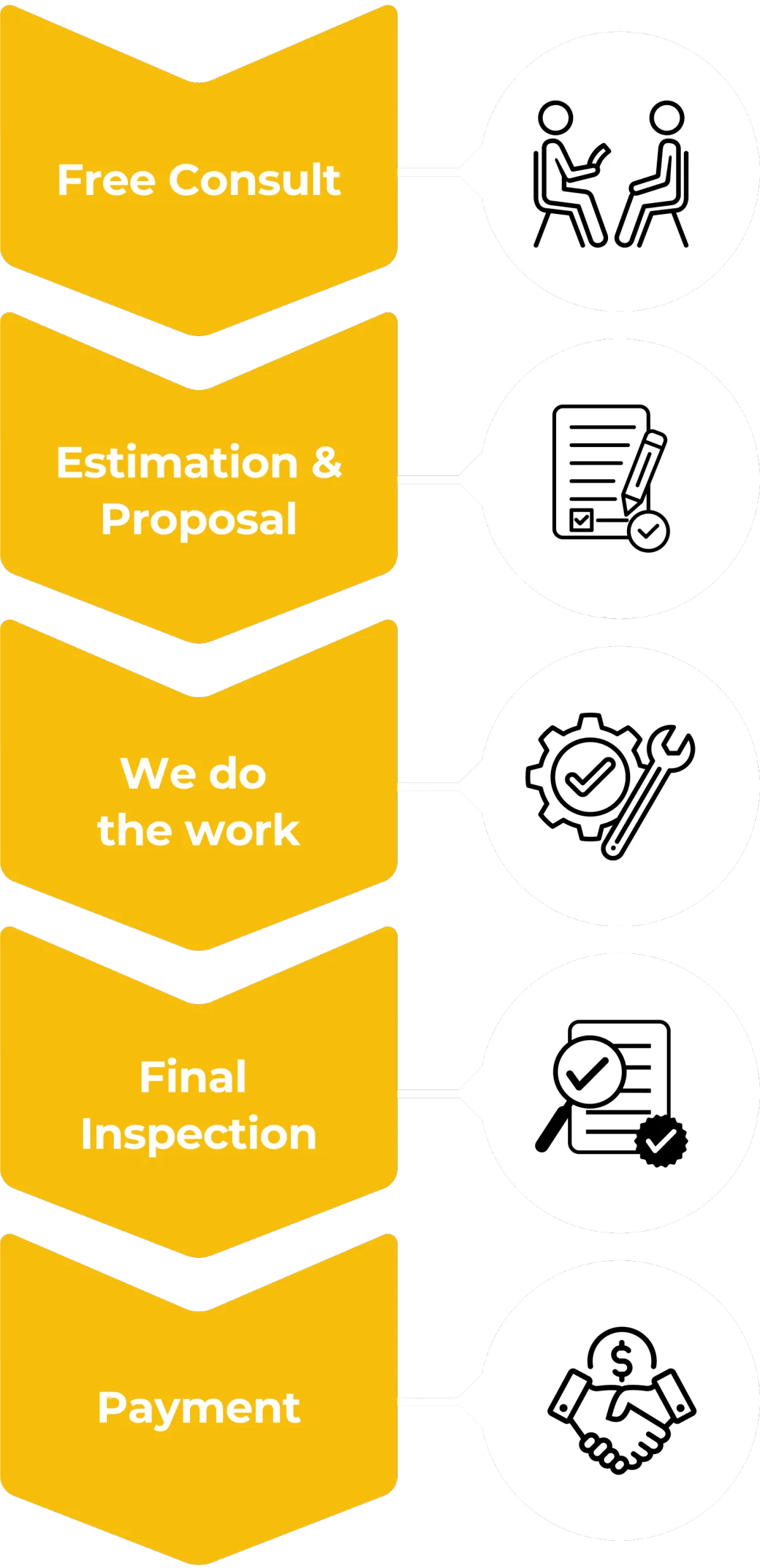
our process
Our process is simple and only contains a few simple steps

READY TO take the next step?
get a free quote TODAY!
