
BLOG
Common Demolition Challenges on Tight Access Properties Across Bondi, Coogee and Sydney's Eastern Suburbs
Many suburbs across Sydney's eastern suburbs were developed long before modern construction equipment existed. Areas such as Bondi, Coogee, Paddington, Woollahra and surrounding suburbs often feature narrow blocks, shared driveways, laneways and homes built close together. These conditions create unique challenges when demolition is required before renovations or new construction.
Unlike open building sites, tight access properties require careful planning, specialised equipment and experienced operators. Understanding these challenges helps property owners appreciate why demolition on restricted sites is often more complex than it first appears.
Limited Access Changes How Demolition Is Performed
One of the biggest challenges is simply getting machinery onto the property. Many homes in Sydney's eastern suburbs have narrow side access, steep driveways or limited street frontage that prevents large excavators from entering.
In these situations, compact excavators and specialised demolition equipment are often used instead. Smaller machinery provides greater manoeuvrability while allowing operators to work safely within confined spaces.
Planning equipment access before demolition begins helps avoid unnecessary delays and reduces the risk of damage to surrounding structures.
Neighbouring Buildings Require Extra Protection
Many older suburbs contain properties built only a short distance apart. Some homes share boundary walls, while others have fences, retaining walls or landscaping located close to the building being demolished.
Protecting these surrounding structures is an important part of the demolition process. Temporary barriers, controlled demolition methods and staged removal of structural elements may all be required depending on the property's layout.
Careful planning also helps minimise vibration, dust and debris affecting neighbouring properties during demolition.
Narrow Streets Affect Site Logistics
Access challenges are not limited to the property itself. Many streets throughout Bondi, Coogee and surrounding suburbs have limited parking, high traffic volumes and narrow roadways.
These conditions influence where machinery can be positioned, how waste is loaded and when trucks can safely access the site.
For larger projects, coordinating machinery movements and waste removal helps keep demolition progressing efficiently while reducing disruption to surrounding traffic and nearby residents.
Underground Services Must Be Identified Early
Established suburbs often contain older underground infrastructure that may not be immediately visible. Water, sewer, gas, electricity, stormwater and telecommunications services all need to be identified before demolition begins.
Accidentally damaging underground services can delay construction, create safety risks and increase project costs.
Locating these services during the planning stage allows demolition to proceed safely while protecting existing infrastructure.
Waste Removal Can Be More Difficult Than the Demolition
On restricted access sites, removing demolition waste is sometimes more challenging than removing the structure itself.
Limited space may prevent multiple trucks from accessing the site at once, requiring waste to be loaded in stages. Smaller machinery may also be needed to transport materials from confined areas to larger collection vehicles.
Efficient waste management helps maintain a safe worksite while ensuring the property is cleared quickly for excavation and foundation works.
Careful Planning Makes Tight Access Projects More Efficient
Every restricted access property presents different challenges, but thorough planning significantly improves the overall demolition process.
Assessing site access, selecting suitable machinery, identifying underground services, protecting neighbouring buildings and organising waste removal before work begins allows demolition to proceed safely and efficiently.
Across Sydney's eastern suburbs, many successful demolition projects rely less on the size of the machinery and more on careful preparation. With the right planning and equipment, even challenging sites can be cleared and prepared for the next stage of construction.



DISCOVER WHAT OUR CUSTOMERS HAVE TO SAY ABOUT US
REVIEWS
REVIEW US ON GOOGLE
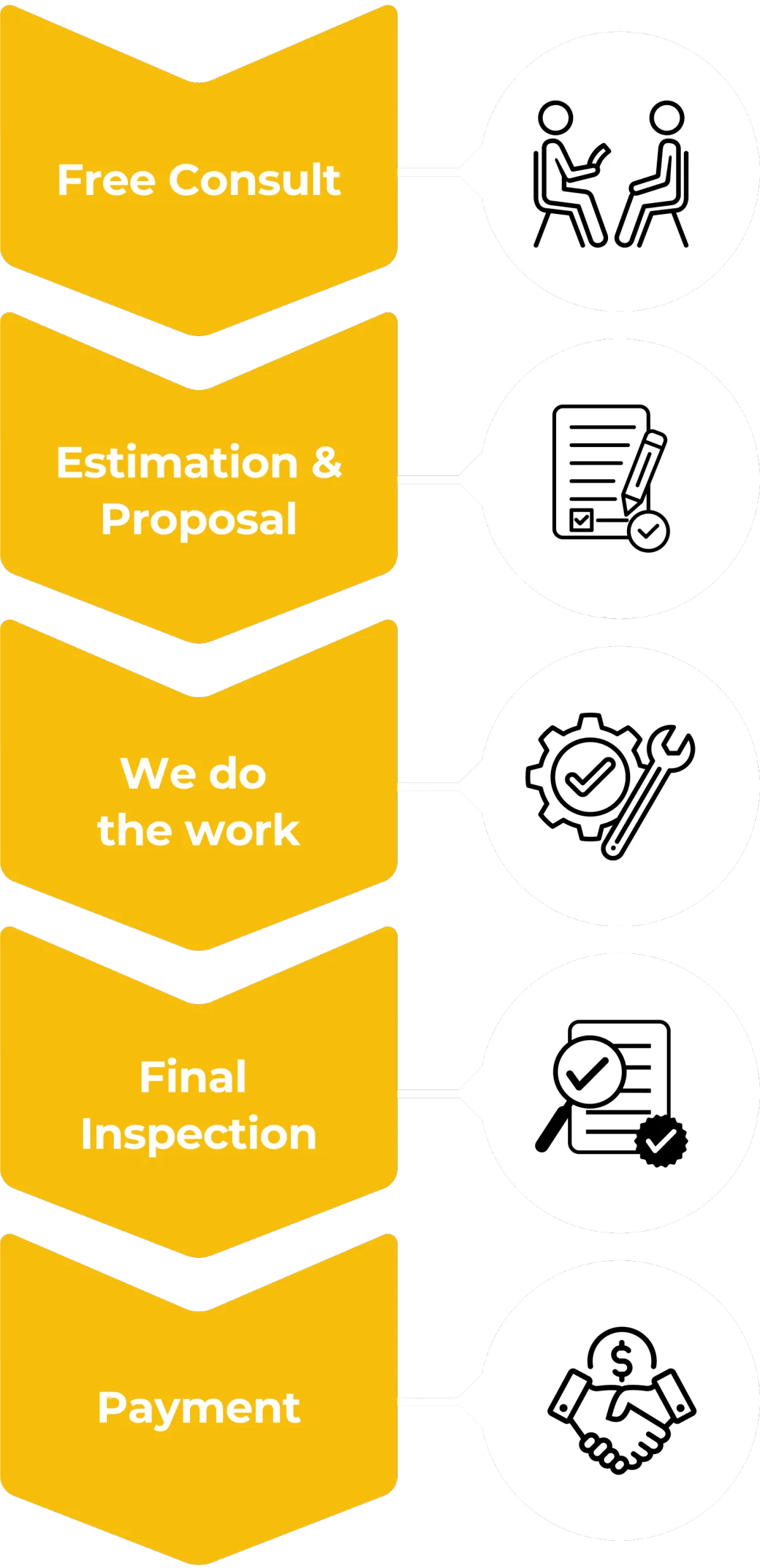
our process
Our process is simple and only contains a few simple steps

READY TO take the next step?
get a free quote TODAY!
